
FranAscent

About

I spent eighteen years in technology and banking before I owned anything.

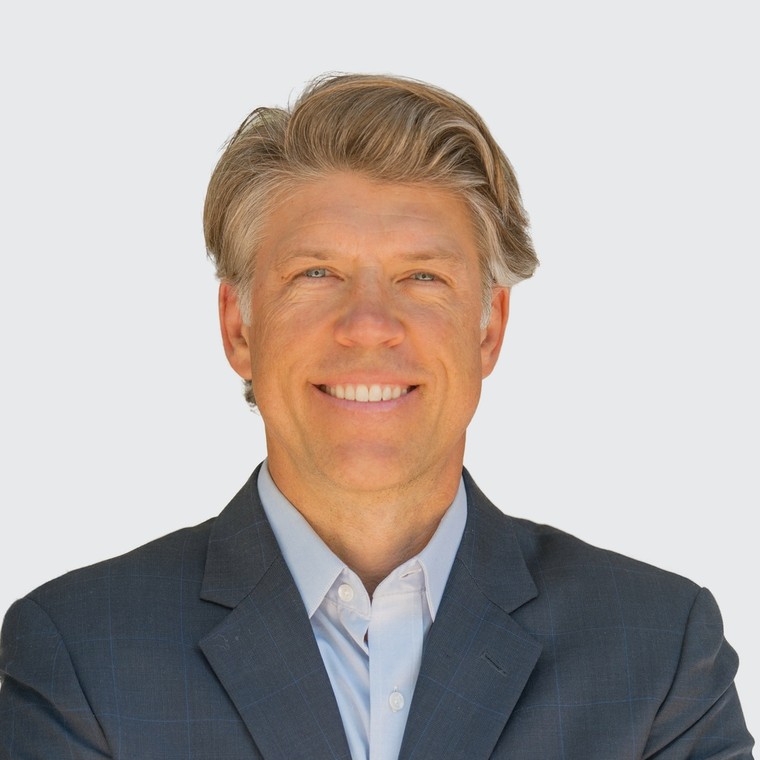
Steve Hitzemann, franchise consultant and multi-unit StretchLab franchise owner
Before

The corporate years.

I started as a software developer, moved into account management, and spent the bulk of my career at Bank of America — technology and operations, business support, sales support, and lending product management.

It was a good career. I learned how large organizations actually work, how credit decisions get made, and what a lender looks for when someone asks to borrow against a business plan. That last part turned out to matter more than I expected.

What I didn't have was control over my own direction. I had an itch to own the outcome — and enough confidence in myself to believe I could.

2018

I became the candidate.

I found StretchLab in a Wall Street Journal article. That was it — no grand plan, just something I read that stuck with me and that I started looking into.

Then I worked with a franchise consultant, and he did something I wouldn't have done on my own. Instead of taking me straight to the brand I'd walked in attracted to, he had me look at businesses with similar models and characteristics — including the only other assisted stretching concept franchising at the time.

That's the part worth understanding about this process. I arrived with an answer. A good consultant made me examine the question. I still chose StretchLab, but I chose it having actually compared it to something, which is a different thing than choosing it because it's what I happened to read about.

I remember the rest of it too. Not knowing which questions were the important ones. Reading an FDD for the first time and not being sure what I was supposed to be alarmed by. Talking to existing franchisees and trying to work out whether the enthusiastic ones were telling me the truth.

Stacey and I signed our first agreement that year, while I was still at the bank. We were named Rookie of the Year.

2020

Ten months in, the world closed.

We opened our first studio ten months before the pandemic hit. A business built entirely on hands-on, one-on-one contact — and suddenly nobody could touch anybody. We were the antithesis to social distancing.

We furloughed ninety-five percent of our team and kept the critical few. Then, as a path forward started to become visible, we brought people back deliberately — the teammates we had confidence in — and used the reset to upskill the team rather than simply restaff it.

I'm not going to dress that up as a growth opportunity. It was the hardest stretch of my working life. But it taught me something about this business that eight normal years wouldn't have: what a franchise system can offer when things go wrong, which parts of the model are load-bearing, and how much of the outcome comes down to the people you've hired.

2022

Going all in.

I left Bank of America in 2022, once I knew my time was better spent building the business than straddling the fence.

That's the honest version of the decision. Not a dramatic exit — an arithmetic one. There came a point where the constraint on the business was me, and continuing to split my attention was costing more than the salary was worth.

We operate seven studios across Charlotte and Columbia, South Carolina today.

Today

I've also seen it from the other side of the table.

Beyond running the studios, I've served on brand, technology, and franchisee advocacy committees within the StretchLab system.

That work is less visible than opening locations, and in some ways it taught me more. Committees are where franchisees and the franchisor actually negotiate — over what gets built, what gets standardized, what the system asks of its owners and what it owes them in return. You see how decisions get made, who gets listened to, and what happens when the two sides disagree.

Most candidates evaluating a franchise focus almost entirely on the concept: the model, the margins, the market. That's the easy part, and it's what the discovery process is built to show you. The harder question — and the one that determines what the next ten years actually feel like — is what kind of partner the franchisor is. Whether they listen. Whether the support is real or a line item. Whether the system improves when franchisees push back.

I know what that looks like from the inside, and it's a large part of what I listen for when I'm evaluating a brand for someone.

Why I do this now

The most consequential financial decision of my life was made better by someone who'd been through it.

I'm not doing this because I ran out of things to do. The studios are a real business and they take real work.

I'm doing it because the decision I made in 2018 was the most consequential financial decision of my life, and I made it better because someone who'd been through it helped me think. Many people considering business ownership or franchising don't have that. They have their favorite AI agent and lots of noise to filter through.

I work with a small number of candidates at a time — usually three to five — because doing this well takes more attention than volume allows.

And I don't disappear when the paperwork is signed. The first eighteen months of ownership are the hardest part — that's when you're hiring, opening, and finding out what the pro forma left out. I'm still reachable then.

Worth saying plainly: I'm an active StretchLab franchisee. If assisted stretching ever comes up as a possible fit for you, you'll hear that from me first, along with exactly why.

About the mountain

The photograph on this site is Mt. Baldy at Alta, and my most accomplished run is tucked into those rocks.

There's only one way up. Lifts take you to the top of the resort, but from there it's a healthy bootpack with your buddies and strangers to an amazing peak and ridgeline to choose your path down.

The path up Baldy is only open when the conditions are right. While it had been on my bucket list for years, I had skied Alta for more than a decade before the stars aligned and the door opened for me. I gathered my friends that were up for the challenge and we made our way up — and down — safely. We were physically prepared, had the right gear, had each other for support, and ultimately, when the opportunity presented itself, had the confidence that we could get it done.

Business ownership, specifically franchising, can follow the same path. People fixate on the acquisition — which brand, how much, what terms — as though signing is the finish line. It isn't. Signing is the ridgeline. Everything that makes ownership worth doing happens on the way down.

What determines whether you get to go isn't wanting it. It's being ready when the conditions open: capital in place, the right information, people around you who've done it before, and the honest confidence that you can execute. If one of those is missing, the answer is to prepare and wait for the next window. That's not failure — I waited more than a decade for Baldy.

My job is to get you ready for the climb and to go up it with you. The line you choose from the top is yours.

Off the clock

Beyond the business.

Stacey and I are the proud parents of three kids, and we're nearing the empty-nest stage. I ski in the winter, kiteboard when the wind is up on the Carolina coast, and play golf and tennis the rest of the year. I garden. I go to live music whenever I can. And I'm a dog person.

Start with a conversation.

We'll talk about where you are, what you're weighing, and whether working together makes sense.

Schedule a call